
AI in Software Development: How It’s Changing the Future of Digital Products
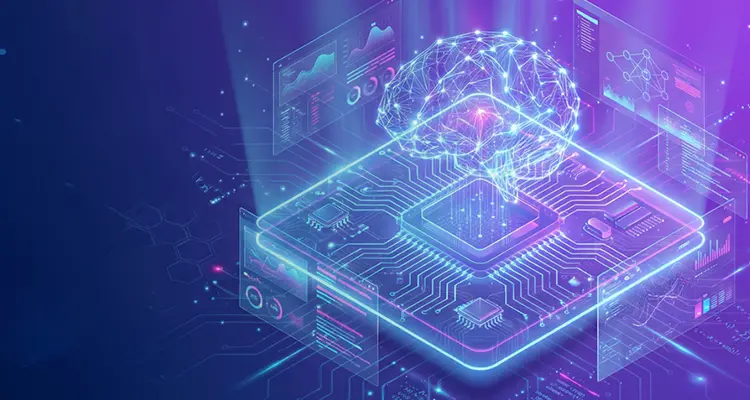
Artificial Intelligence (AI) is no longer a futuristic concept—it is actively transforming the way software is designed, developed, tested, and maintained. From automating repetitive coding tasks to predicting user behavior, AI is reshaping the entire software development lifecycle. Businesses that adopt AI-driven development strategies are not only building smarter products but also delivering faster, more personalized, and highly scalable digital solutions. Let’s explore how AI is changing the future of digital products.
1. Smarter & Faster Code Development
AI-powered tools such as intelligent code assistants can now suggest code snippets, detect errors in real time, and even generate entire functions based on simple instructions. This significantly reduces development time and minimizes human error.
Developers can:
-
Automate repetitive coding tasks
-
Detect bugs instantly
-
Improve code quality
-
Speed up project delivery
This allows teams to focus more on innovation rather than routine programming tasks.
2. Automated Testing & Quality Assurance
Testing has traditionally been one of the most time-consuming phases in software development. AI simplifies this process by:
-
Automatically generating test cases
-
Identifying potential vulnerabilities
-
Predicting system failures
-
Performing regression testing efficiently
AI-driven testing tools ensure better accuracy and faster release cycles, resulting in more reliable digital products.
3. Predictive Analytics for Better Decision Making
AI enables software systems to analyze large amounts of data and generate actionable insights. Businesses can now:
-
Understand user behavior patterns
-
Predict market trends
-
Personalize user experiences
-
Optimize product features
This data-driven approach helps companies build products that truly meet user expectations.
4. Enhanced User Experience (UX)
Modern digital products are becoming more intelligent and user-centric because of AI. Features like chatbots, voice assistants, recommendation engines, and personalized dashboards are powered by AI algorithms.
These features:
-
Improve customer engagement
-
Increase retention rates
-
Deliver personalized experiences
-
Provide 24/7 support through automation
AI ensures that digital products are not just functional, but intuitive and adaptive.
5. Continuous Improvement Through Machine Learning
Machine Learning (ML), a subset of AI, allows software systems to learn and improve over time without being explicitly programmed for every scenario.
This means:
-
Applications become smarter with usage
-
Security systems adapt to new threats
-
E-commerce platforms improve product recommendations
-
SaaS platforms optimize performance automatically
The result is a continuously evolving digital product.
6. AI in DevOps & Deployment
AI is also transforming DevOps practices by automating infrastructure management, monitoring system performance, and predicting downtime before it happens.
Benefits include:
-
Faster deployments
-
Reduced operational costs
-
Improved system reliability
-
Smarter resource allocation
This ensures smoother development pipelines and better product stability.
7. The Future of AI in Software Development
The future of digital products will be heavily driven by AI innovation. We can expect:
-
Fully autonomous development environments
-
Hyper-personalized applications
-
Advanced cybersecurity systems
-
AI-generated UI/UX designs
-
Real-time self-healing software systems
Organizations that integrate AI today will lead tomorrow’s digital landscape.
Final Thoughts
AI in software development is not about replacing developers—it is about empowering them. By automating routine tasks, enhancing decision-making, and enabling intelligent features, AI is helping businesses create smarter, faster, and more efficient digital products.
As technology continues to evolve, AI will remain at the core of innovation in software engineering. Companies that embrace AI-driven development strategies today are positioning themselves for long-term success in the digital era.