

The Power of AI Integration in Modern Enterprises
Discover how AI integration helps businesses automate processes, improve decision-making, and boost growth. Learn key benefits, use cases, and strategies.

AI Integration is no longer just a futuristic idea—it has become a key part of how modern businesses operate and grow. From automating repetitive tasks to providing deep insights through data, AI is helping companies become more efficient, smarter, and customer-focused.
What is AI Integration?
AI Integration refers to the process of embedding artificial intelligence technologies into existing business systems, applications, and workflows. This can include machine learning models, chatbots, recommendation engines, predictive analytics, and more.
Instead of replacing systems, AI enhances them by making them more intelligent and responsive. For example, an e-commerce website can use AI to recommend products, while a customer support system can use chatbots to handle common queries instantly.
Key Benefits of AI Integration
1. Improved Efficiency
AI can automate repetitive and time-consuming tasks, allowing teams to focus on more strategic work. This reduces errors and increases productivity.
2. Better Decision-Making
With AI-powered analytics, businesses can make data-driven decisions faster and more accurately. AI can analyze large datasets and identify patterns that humans might miss.
3. Enhanced Customer Experience
AI tools like chatbots and personalized recommendations improve user engagement. Customers receive faster responses and more relevant suggestions.
4. Cost Reduction
Automation and optimization help reduce operational costs. Businesses can achieve more with fewer resources.
5. Scalability
AI systems can easily scale with business growth, handling increasing workloads without significant changes to infrastructure.
Common Use Cases of AI Integration
E-commerce
AI helps in product recommendations, demand forecasting, and personalized shopping experiences.
Healthcare
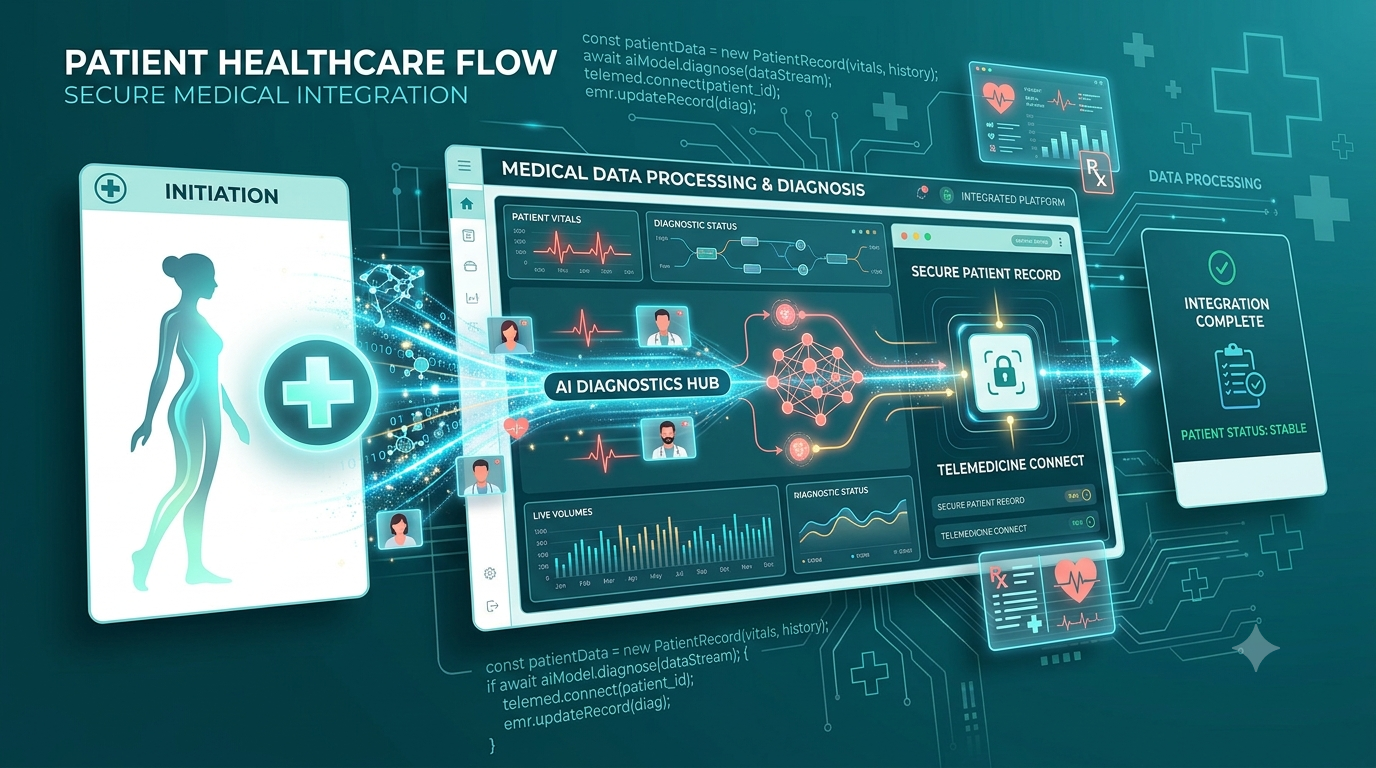
AI is used for diagnosis support, patient data analysis, and predictive healthcare solutions.
Finance
Fraud detection, risk assessment, and automated trading systems are powered by AI.
Marketing
AI enables targeted campaigns, customer segmentation, and performance analysis.
Customer Support
Chatbots and virtual assistants provide 24/7 support and quick query resolution.
Steps to Implement AI Integration
1. Identify Business Needs
Understand where AI can add value in your processes.
2. Choose the Right Tools
Select AI technologies that fit your business goals and budget.
3. Data Preparation
Ensure you have clean and structured data for accurate AI performance.
4. Integration with Existing Systems
Connect AI tools with your current platforms like CRM, ERP, or e-commerce systems.
5. Testing and Optimization
Continuously monitor performance and make improvements.
Challenges of AI Integration
While AI offers many benefits, there are also challenges such as data privacy concerns, high initial investment, and the need for skilled professionals. However, with proper planning and strategy, these challenges can be managed effectively.
Future of AI Integration
The future of AI integration looks promising. As technology continues to evolve, AI will become more accessible and powerful. Businesses that adopt AI early will have a competitive advantage in the market.
Conclusion
AI Integration is transforming the way businesses operate by making systems smarter, faster, and more efficient. Whether it's improving customer experience or optimizing operations, AI plays a crucial role in modern business success. By adopting the right strategy and tools, companies can unlock new opportunities and stay ahead in the competitive landscape.
-Photoroom.png)