

The Ultimate Guide to Reporting and Dashboard Solutions for Modern Businesses
Discover how reporting and dashboard solutions help businesses turn data into actionable insights, improve decision-making, and drive growth with real-time analytics.
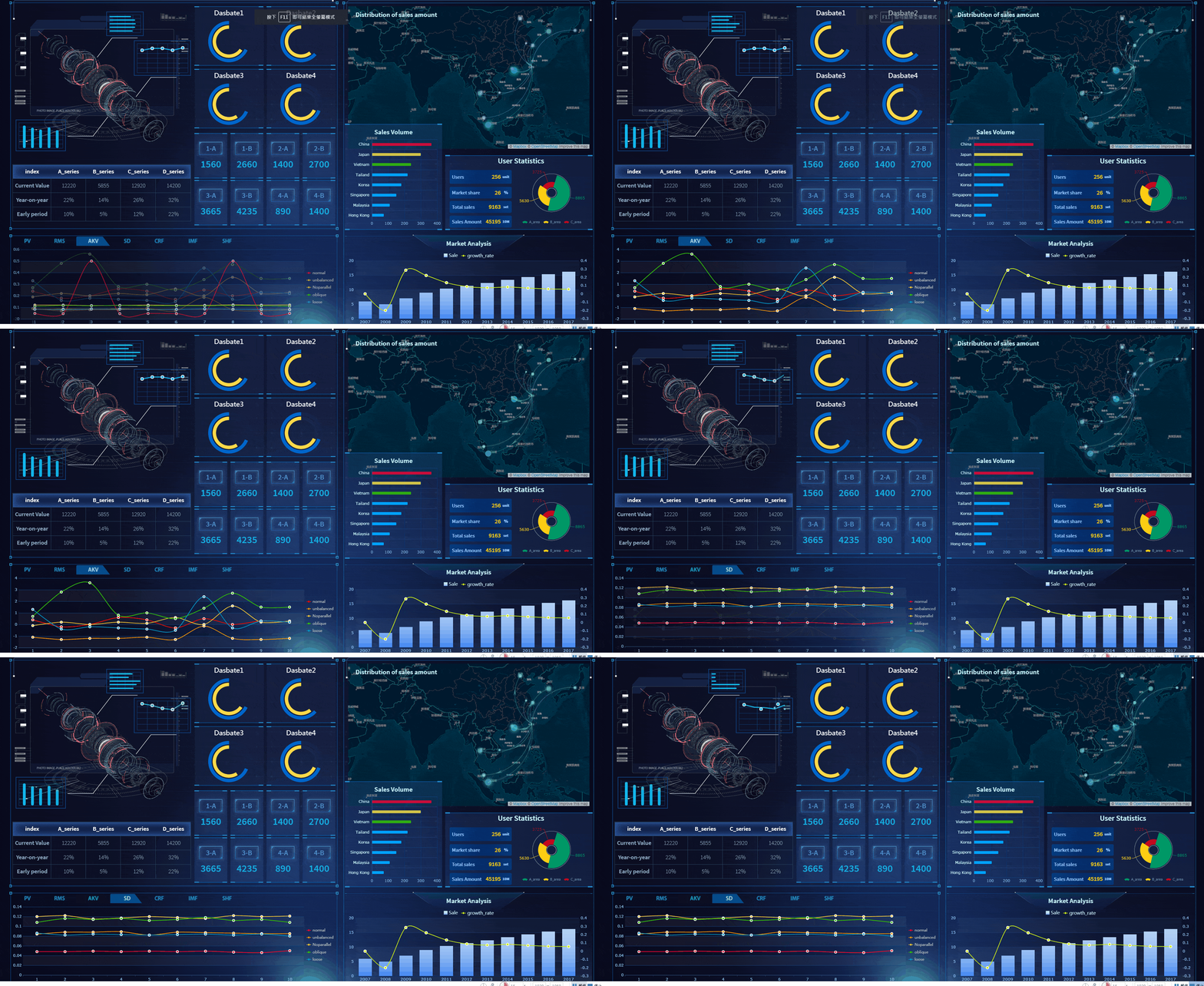
In today’s data-driven world, businesses generate massive amounts of information every day. However, raw data alone has little value unless it is analyzed, organized, and presented in a meaningful way. This is where reporting and dashboard solutions come into play. These tools help organizations convert complex data into clear, visual insights that support better decision-making.
What are Reporting and Dashboard Solutions?
Reporting solutions are systems designed to collect, organize, and present data in structured formats such as reports, summaries, and charts. Dashboards, on the other hand, provide a visual interface where key metrics and performance indicators are displayed in real-time.
Together, they form a powerful combination that enables businesses to monitor performance, identify trends, and make informed decisions quickly.
Key Features of Reporting and Dashboard Solutions
1. Real-Time Data Monitoring
Modern dashboards allow businesses to track data in real time. This ensures that decision-makers always have access to the latest information.
2. Data Visualization
Charts, graphs, and interactive visuals make it easier to understand complex datasets. Visual representation improves clarity and speeds up analysis.
3. Customizable Reports
Businesses can tailor reports based on their specific needs, whether it’s sales performance, customer behavior, or operational efficiency.
4. KPI Tracking
Dashboards help monitor key performance indicators (KPIs) that are critical for business success.
5. Integration Capabilities
These solutions can integrate with various systems such as CRM, ERP, and marketing platforms, providing a unified view of data.
Benefits of Reporting and Dashboard Solutions
Improved Decision-Making
With clear and accurate data insights, businesses can make faster and more confident decisions.
Enhanced Productivity
Automated reporting reduces manual effort and saves time, allowing teams to focus on strategic tasks.
Better Data Accuracy
Centralized data systems minimize errors and ensure consistency across reports.
Increased Transparency
Dashboards provide visibility into business operations, helping teams stay aligned and accountable.
Competitive Advantage
Organizations that leverage data effectively are better positioned to outperform competitors.
Types of Dashboards
1. Operational Dashboards
Used for monitoring daily operations and real-time activities.
2. Analytical Dashboards
Designed for deep data analysis and identifying trends over time.
3. Strategic Dashboards
Focus on high-level metrics and long-term business goals.
Popular Use Cases
- Sales Performance Tracking
- Marketing Campaign Analysis
- Financial Reporting
- Customer Behavior Insights
- Supply Chain Monitoring
Best Practices for Implementing Dashboard Solutions
- Define clear business goals and KPIs
- Keep dashboards simple and user-friendly
- Use relevant and meaningful data only
- Ensure data accuracy and consistency
- Regularly update and optimize dashboards
Future of Reporting and Dashboards
With advancements in AI and machine learning, reporting tools are becoming smarter. Predictive analytics, automated insights, and interactive dashboards are shaping the future of business intelligence. Companies will increasingly rely on these technologies to stay competitive in a rapidly evolving market.
Conclusion
Reporting and dashboard solutions are no longer optional—they are essential tools for modern businesses. By transforming raw data into actionable insights, they empower organizations to make smarter decisions, improve efficiency, and achieve sustainable growth. Investing in the right reporting and dashboard system can be a game-changer for any business aiming to succeed in the digital age.
.jpeg)