

What is Firmware Development? A Beginner to Advanced Guide
Learn everything about firmware development, including its process, tools, importance, and future trends. A complete guide for beginners and professionals in embedded systems.
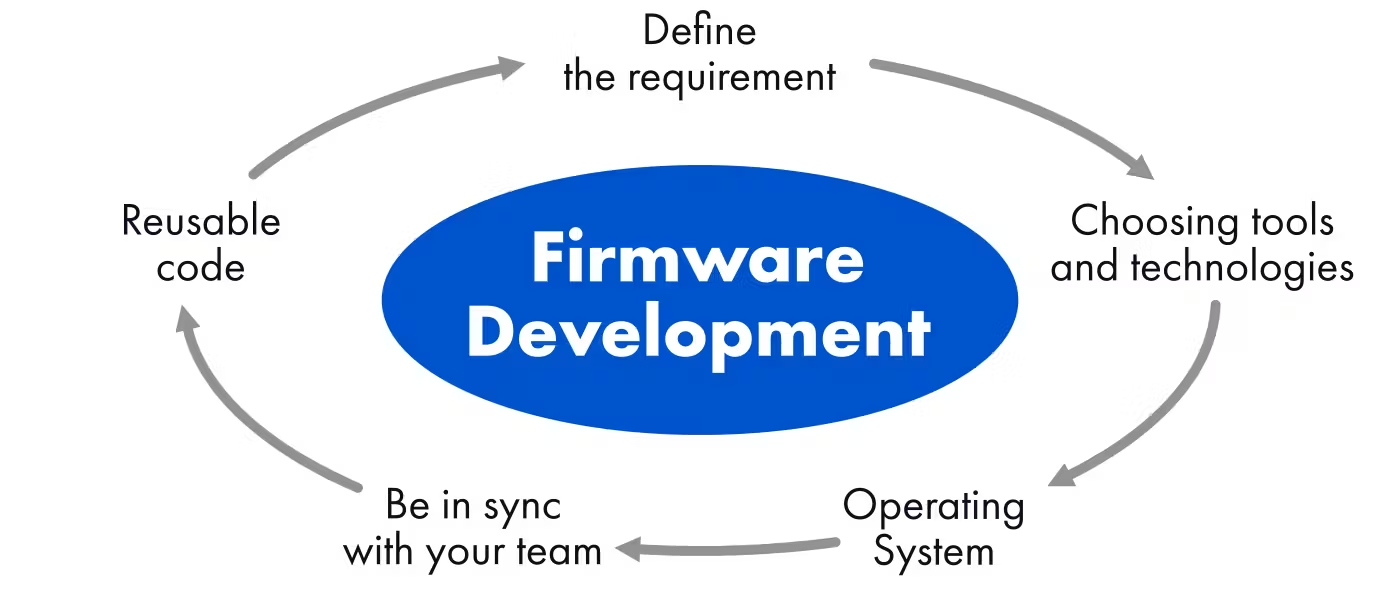
Firmware development is a specialized field of software engineering focused on creating low-level software that directly interacts with hardware. Unlike traditional software applications, firmware operates at the core of devices, controlling how hardware functions.
From smartphones and washing machines to industrial robots and IoT devices, firmware plays a critical role in ensuring smooth and efficient operation.
? What is Firmware?
Firmware is a type of software permanently embedded into hardware devices. It acts as a bridge between hardware and higher-level software, enabling communication and functionality.
Examples include:
- BIOS in computers
- Firmware in routers
- Embedded systems in cars
- Smart home device controllers
? Importance of Firmware Development
Firmware development is essential for:
✔️ Hardware Functionality
Without firmware, hardware cannot operate as intended.
✔️ Performance Optimization
Efficient firmware ensures devices run faster and consume less power.
✔️ Security
Firmware plays a key role in protecting devices from vulnerabilities.
✔️ Device Reliability
Stable firmware prevents crashes and hardware failures.
? Firmware Development Process
1. Requirement Analysis
Understanding hardware specifications and device functionality.
2. Design & Architecture
Planning memory usage, processing logic, and communication protocols.
3. Coding
Firmware is typically written in:
- C
- C++
- Assembly Language
4. Testing & Debugging
Using simulators and hardware testing tools to identify issues.
5. Deployment
Flashing firmware onto hardware devices.
6. Maintenance & Updates
Providing OTA (Over-the-Air) updates and bug fixes.
? Tools Used in Firmware Development
Popular tools and technologies include:
- IDE Tools: Keil, MPLAB, IAR Embedded Workbench
- Debuggers: JTAG, SWD
- Microcontrollers: ARM Cortex, AVR, PIC
- RTOS: FreeRTOS, VxWorks
- Version Control: Git
? Key Skills Required
To become a firmware developer, you need:
- Strong knowledge of C/C++
- Understanding of microcontrollers
- Hardware interfacing skills
- Debugging and problem-solving
- Knowledge of communication protocols (UART, SPI, I2C)
? Challenges in Firmware Development
Firmware development comes with unique challenges:
- Limited memory and processing power
- Hardware dependency
- Debugging complexity
- Real-time performance constraints
? Firmware Development in IoT
With the rise of IoT (Internet of Things), firmware development has become more important than ever.
Applications include:
- Smart homes
- Wearable devices
- Industrial automation
- Healthcare devices
Firmware ensures connectivity, data processing, and device communication in IoT ecosystems.
? Future Trends in Firmware Development
? AI Integration
Smart firmware capable of learning and adapting.
? Enhanced Security
Focus on secure boot and encryption.
? Edge Computing
Processing data closer to devices.
? OTA Updates
Seamless remote updates for devices.
? Conclusion
Firmware development is the foundation of modern electronic devices, enabling seamless communication between hardware and software. As technology continues to evolve, the demand for skilled firmware developers is rapidly increasing, especially with the growth of IoT and smart devices.
Whether you are a beginner or an experienced developer, mastering firmware development opens the door to exciting opportunities in embedded systems, robotics, automotive technology, and beyond.


.jpeg)